March 28, 2023
As a remote-first company, our team was all-in on working asynchronously. We value autonomy and flexibility, so maximizing freedom in our calendars felt like the right move. Over time we came to realize that our fierce autonomy was actually creating disconnection and ineffectiveness in our work.
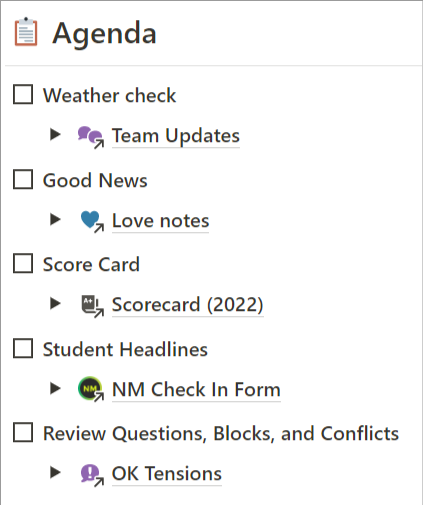
For the duration of 2022, our team had one 30 minute sync per week. We would provide a brief “weather check” to update one another on how we were doing, then scan the nice words folks had shared about our course, quickly look at weekly metrics we were tracking, review the check-in forms students had submitted, and discuss any tensions (things that were blocking us).
This was the only time in a week that we would all sync up. Occasionally it ended up being 45-60 minutes, depending on the backlog of tensions to discuss.
Our original weekly Team Sync meeting template.
Once per month, we would have a 60 minute “Strategic” sync where we briefly reviewed our vision and roadmap (truthfully we often skipped over this), and then discussed “strategic” tensions (usually things related to products/trainings we were considering offering).
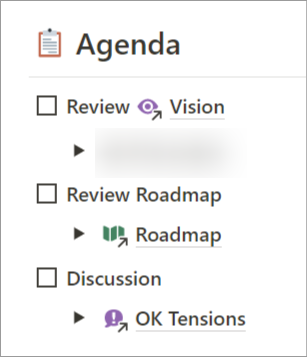
Our original monthly Strategic Sync meeting template.
In addition to the above, we would occasionally have ad-hoc meetings to plan out workshops or content.
The rest of the time we were engaging in Notion and through Slack, but predominantly working independently on our projects with little cross-collaboration. It seemed like it should be great—everyone working on what they were excited about, with the freedom to design their everyday, and no scheduling expectations—but it turned out we ended up craving more sync time, not less.
We ended up so siloed in our own work that we were not effectively leveraging each other’s skills and knowledge. Our projects weren’t progressing effectively because we weren’t collaborating creatively, reviewing each other’s work, or holding one another accountable. We were left feeling disconnected from one another since almost all of the interaction we did have was focused on the work. We were missing opportunities to connect as human beings. We were a group of awesome individuals, but as a team we weren’t functioning at our best.
Realizing the above and where our working style was not truly working for us, we introduced new meeting types and a new meeting cadence which we defined in our Operations documentation:
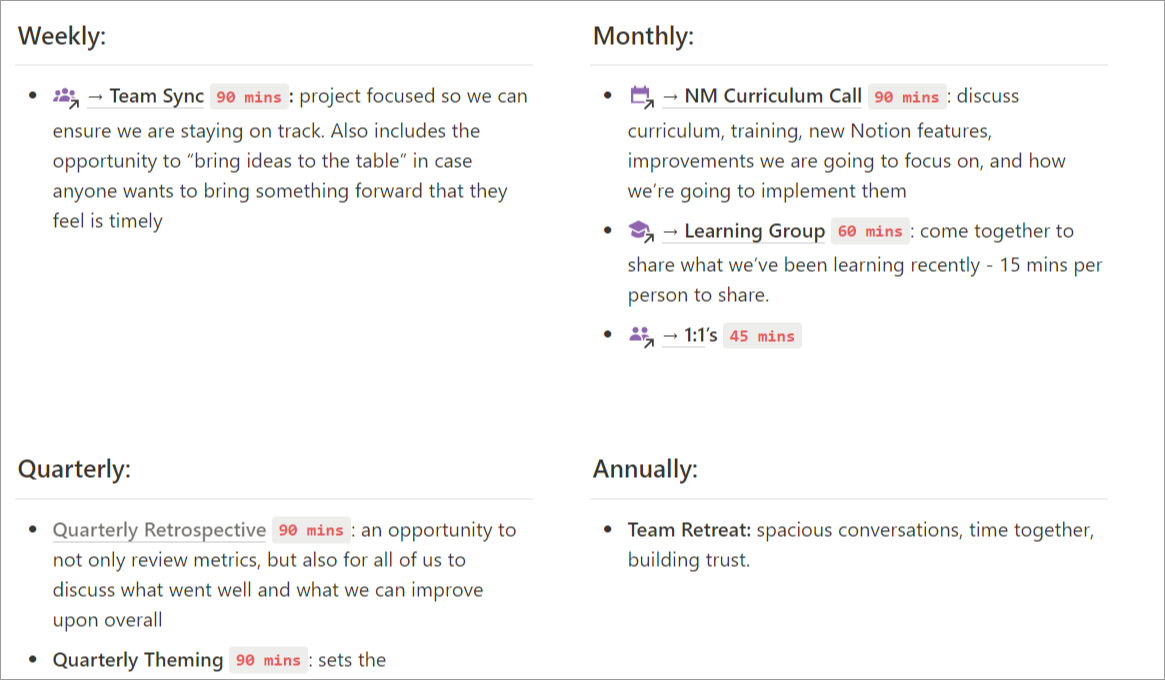
An overview of our meeting types and cadence.
We developed templates in Notion for each of these call types so they each have a dedicated Agenda that helps make our sync time as effective as possible. These templates are stored in our Actions database and we use a single-select Type property with the value “event” to differentiate our meetings from tasks. Most events benefit from the same properties as our tasks, so it made sense to include them within the same Actions database.
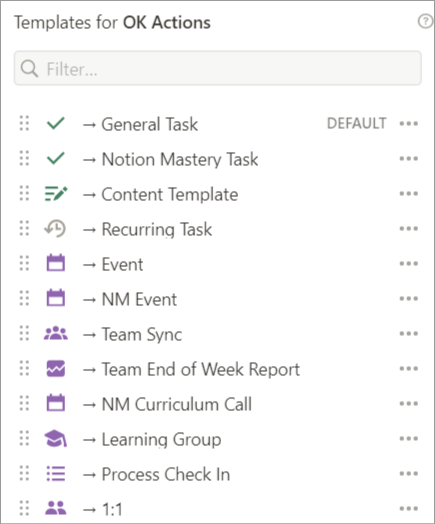
The green icons are task templates, the purple icons are meeting templates, in our Actions database.