March 21, 2023
This showed up in the poor ratio of projects we had started (or intended to start) versus what we actually finished, and also in the bumpy unfolding of projects which had been poorly conceptualized.
We have some fantastically inspired idea-generators on our team which means no shortage of great ideas. Our downfall was falling into the trap of hearing an idea, getting excited about it, and immediately turning it into a project without considering our capacity or whether the idea was truly aligned with our current goals. This resulted in our projects database becoming a collection of “someday-maybe” items and way too many “active” projects which were mostly languishing. It created a lot of psychological “debt” having all these projects hanging over our heads, feeling like we should be moving them forward, when realistically we did not have the capacity to do so.
You have probably already guessed by what I’ve shared so far that we were chronically overestimating our capacity. Each of our team members might have a dozen “active” projects on the go. Do-able? Absolutely not. Further, because we were jumping straight into the work without any pre-planning, we were not accurately estimating how long the work would take. A 6 week project was often turning into a 6 month project. No bueno.
Our use of Notion to manage projects amounted to not much more than a linked view of our Actions database in the body of the project, showing a collection of tasks. We were not spending enough (or sometimes any) time conceptualizing what we wanted to do, why it was important, what resources were required, and the integrated sequence of work needed to get to the final outcome.
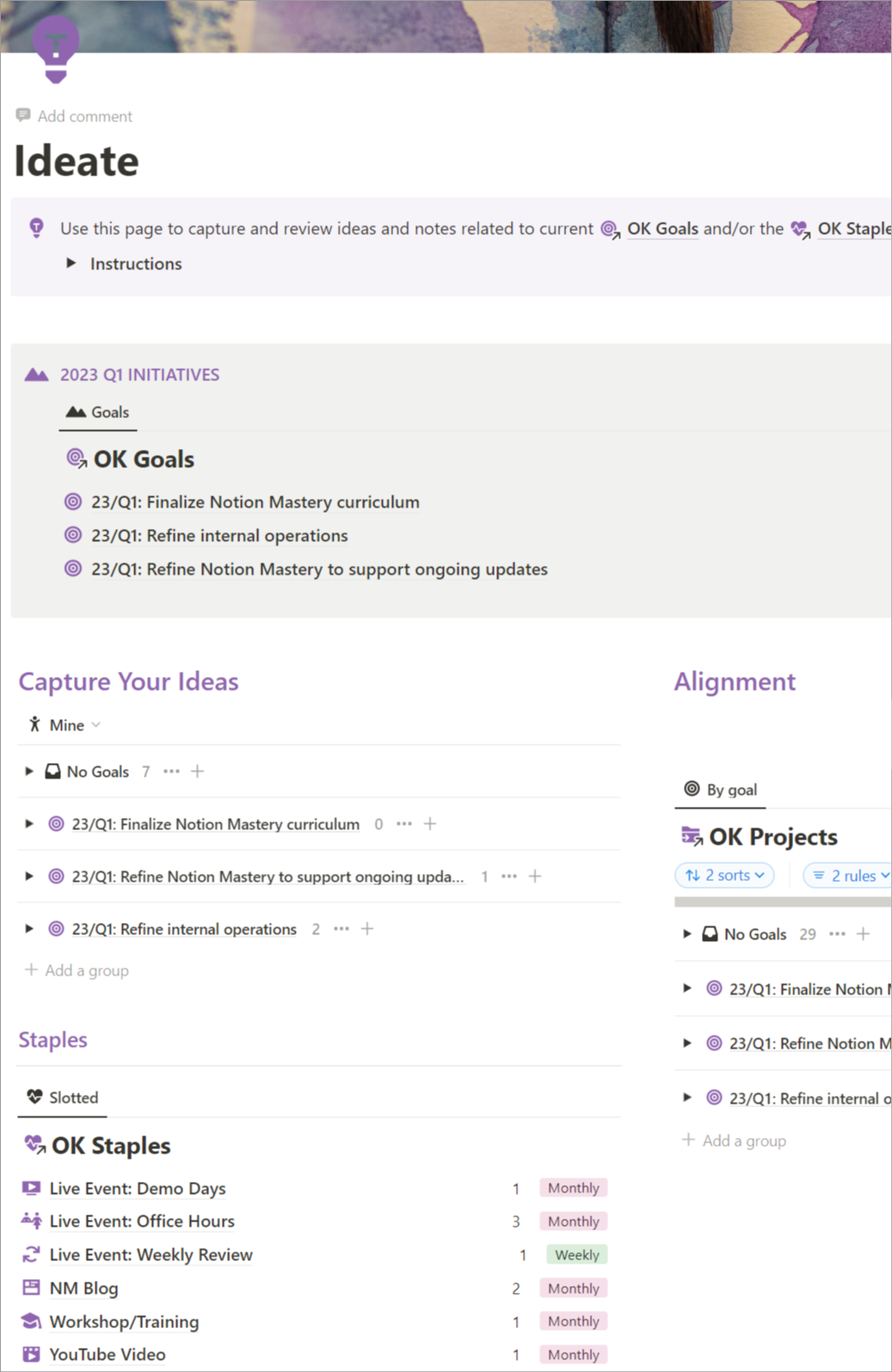
Our team’s ideation dashboard in Notion.
Ideation is inspiring and important to our team. However, ideas had started creating tension. Since almost every new idea became a project, and we couldn’t possibly keep up, ideas started to feel like a threat to our timelines and goals.
We have now established an understanding that ideas are awesome, welcome, and should be expressed, and there is no guarantee an idea will become a project. New ideas are added to our Notes and Ideas database and can be raised for discussion at our weekly syncs. Our Ideate dashboard helps us relate ideas to our current goals, as well as our Staples (the deliverables we are responsible for weekly and monthly within our course and community).
Only the ideas that we (as a team) identify as timely and aligned with our current goals will be elevated to our Projects database. Instead of carrying a lot of project “debt”, we have endless ideas which feel like expansive possibilities, and a more streamlined list of projects.
Our project database has gone from a glorified list of tasks and resources to an important part of our project conceptualization. Rather than taking an idea and immediately jumping into working on the project, we spend time shaping and planning the project in detail before any actual project work begins.
Our new project template walks us through the following phases: